

the unspooling continues... pt. 3
writing is wild, y'all... what did i get myself into?

“how’s it going?”
it should be the most innocuous phrase in the english language…
so why does every syllable slam like a cannonade of rifle fire against my eardrums?
i locked the door to my own cell and i lost the key
Remember the drill sergeant scene from Full Metal Jacket?
If you’ve somehow never seen it or simply need/want a foul-mouthed reminder, here's a link to the clip I'm referencing.
(WARNING!! IT IS EXTREMELY NSFW, SO PROCEED WITH DUE CAUTION.)

The scene is set in a Marine barracks wherein a group of fresh-faced recruits await the start of boot camp. Their stoic silence is contrasted by the extravagant flair with which their drill sergeant, Gunnery Sergeant Hartman, ravages and excoriates them. Hartman accosts the recruits with shocking, even depraved, language and inflicts swift, retributory physical violence for the slightest provocation. In just a few withering minutes of relentless verbal assault, Hartman has fully acquainted his recruits with their new bedfellows: stress, anxiety, fear, and misery.
The scene masterfully imparts an inescapable conclusion: Gunnery Sergeant Hartman is a real nasty sumbitch. (And the four decades of socio-cultural change since the film’s release have only made him seem even nastier than the filmmakers originally intended.)
But while Gunnery Sergeant Hartman is anything but delicate and sensitive, he has an important and difficult job to do. Because, harsh as his words and actions are—compared to the horrors of war? He’s little more than a fart in a windstorm.
His brutal treatment of his charges comes from a place of—maybe not love, necessarily—but certainly with an eye toward their future wellbeing. Even if his concern is more about the Corps and the nation than the individual recruit himself, Hartman’s ultimate purpose is to equip his charges with the skills and knowledge they’ll need to survive in the harshest combat zones. His job isn’t to make them feel better or to provide gentile comfort. In fact, ensuring their comfort and security would probably be counterproductive in this case. His job, quite simply, is to turn otherwise ordinary men into Marines. And to do that, he must prepare them by inflicting ever-greater levels of misery upon them, all in the name of enduring the ultimate suffering still to come.
It’s a nasty job… but somebody’s gotta do it…
and if you get it then you just might not know what to do with it
For the last few weeks, a grim silence has reigned over my writing room. As the creative deadlock stretched from days to weeks, I became intimately and brutally reacquainted with misery myself.
As I struggled to achieve a breakthrough or greater clarity about what I was experiencing, I vaguely recalled a passage by author Steven Pressfield from his invaluable little book The War of Art that seemed to speak to what I was feeling.
Maybe it would help me through the bind, I thought.
Besides, I was fresh out of better ideas—so I plucked my copy from the shelf and read until I landed on a passage that helped fill my writing room once again with the noisy clacking of keys and the low hum of instrumental music.
Which is why I brought up Emrey’s terrifyingly brilliant performance in Full Metal Jacket: Pressfield’s words, while not nearly as profane, amounted to a similar kind of tough love wakeup call. Evidently, I needed somebody to come along and kick me in the ass, spit in my face, and remind me to either stow my bellyaching or accept my fate as the most worthless, ugliest little maggot you’ve ever had the misfortune of setting eyes upon…
Entitled “How to be Miserable,” here’s what helped me breakthrough my latest creative rut (bold is my emphasis, not the original text):
In my younger days dodging the draft, I somehow wound up in the Marine Corps. There’s a myth that Marine training turns baby-faced recruits into bloodthirsty killers. Trust me, the Marine Corps is not that efficient. What it does teach, however, is a lot more useful.
The Marine Corps teaches you how to be miserable.
This is invaluable for an artist.
Marines love to be miserable. Marines derive a perverse satisfaction in having colder chow, crappier equipment, and higher casualty rates than any outfit of dogfaces, swab jockeys, or flyboys, all of whom they despise. Why? Because these candy-asses don’t know how to be miserable.
The artist committing himself to his calling has volunteered for hell, whether he knows it or not. He will be dining for the duration on a diet of isolation, rejection, self-doubt, despair, ridicule, contempt, and humiliation.
The artist must be like that Marine. He has to know how to be miserable. He has to love being miserable. He has to take pride in being more miserable than any soldier or swabbie or jet jockey. Because this is war, baby. And war is hell.
Excerpt from The War of Art: Break Through the Blocks and Win Your Inner Creative Battles by Steven Pressfield, Warner Books (2002), p. 68.
Gee… what a lovely sentiment, huh? And it doesn’t exactly match our romantic image of the creative life, now does it?
Oh? What’s that? All that misery I’ve been feeling? That’s just the helping of suffering I asked for…?
Great!
“Whether he knows it or not…”—mark me down for knew it not, I guess.
Well.
No more.
Lesson learned.
And you might be thinking, if all that’s true, why would any damn fool willingly “volunteer for hell?” Who in their right mind would desperately pursue hell as if their very fate or sanity or life itself depended upon it? Aren’t there better, easier ways to spend your time and make your living?
And you know what? Those are great questions… I’ve been mulling them over for the last few weeks and here’s what I’ve concluded.
The answer—well, my answer, anyway—is that by avoiding our commitment to our work, we damn ourselves to the worst possible hell. If doing our work is miserable stuff, not doing it is like misery-squared.
Not doing our work brings on a kind of soul sickness that’s all the more miserable because it comes from absence.
And that’s the trick… that’s the bind that artists find ourselves in, regardless of our medium. Doing art is painful, yes… but not doing it?
Truly unimaginable.
When I came to this realization it completely changed how I conceived of the “problem” that needed solving. Clarity hit me like a runaway freight train: my problem wasn’t the feeling of misery itself but whatever was keeping me from working despite the misery.
Ah.
Right idea. Wrong target.
And so, as I found myself surrendering ground in the Eternal Battle against what Pressfield calls “Resistance” (which constitutes anything and everything that prevents you from doing “your work”), I noticed that “it” (Resistance) was a feeling of tremendous, immobilising tension. I realised that I was being pulled apart; stretched; fragmented; broken. Part of me wanted to go one way, while another part of me wanted—just as fervently—to go in the opposite direction. In response, my neck and shoulder muscles locked up and my mind became either a raging, chaotic mess or an eerily blank slate.
I felt—knew—I needed to move, to act, but where do you go when you’re being pulled in two opposing directions? I was paralysed… which made the misery all the more miserable.
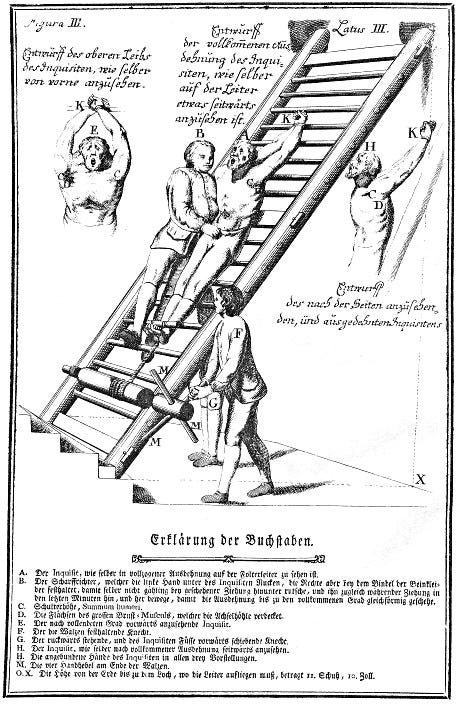
It was like being tortured on the rack—hour by hour I could hear that awful gear turning and the ropes tightening and my limbs—both mental and physical—stretching to their breaking point.
To escape such an exquisite trap, I realised, would require a sacrifice…
Well, I figured, my first option would be to let go of the feeling that I should be doing “whatever it takes” to ensure that unspooling makes enough money to allow my continued survival. (A feeling which tends to express itself like a klaxon repeatedly blaring unveiled threats throughout my mind: “IF YOU DON’T WANT TO STARVE AND LOSE EVERYTHING THEN YOU NEED TO WORK—WORK YOUR ASS OFF!—WORK AS MUCH AND AS OFTEN AS POSSIBLE! WORK!! WORK!!! WORK!!!!!”)
My tendency when fully identified with and attached to this kind of thinking is to feel like I should be constantly exerting—(forcing it)—because there’s so much “to do,” which implies that I should be guided by an almost rabid, zealous sense of effort.
I’m sure it’s abundantly obvious why I felt such intense reluctance to relinquish my attachment to these particular feelings despite the damage they were doing. (As they say: a man has to eat.)
Alright then… what about option two?
Well, the alternative sacrifice, I realised, would amount to abandoning my commitment to using unspooling to create the most meaningful art I’m capable of producing.
Experience and instinct tell me creating something meaningful can’t be forced. It isn’t something to be achieved through effort—at least, not through effort alone. There’s no amount of effort and hard work that’s going to reveal your Voice to you and to allow it to speak… you can only give it the space and permission to do so.
(I promise I’m not trying to sound like a horrifically pretentious ass hat, by the way.)
I believe that making meaningful art requires a faithful commitment to “do less”… in fact, it requires a commitment to “do” as little as possible. (More on what I mean by that in a minute.)
That’s the bind I found myself in.
On the one hand, I felt compelled to act—although that’s not quite it, it was more like feeling compelling to always be acting. I doubted if I could succeed without constant striving. I worried that every second of the day that I wasn’t scheming and plotting about unspooling might represent a crucial missed opportunity.
But on the other hand, I felt compelled to slow down and remain open. I felt committed to not forcing things. I felt like thinking less and relaxing my desire to direct and orchestrate every little detail. I worried that every second of the day that I spent scheming and plotting about unspooling might represent a crucial missed opportunity…
Again: I had a decision to make. I had to let go of something. If I continued to try try to pursue both of these feelings I would either be torn apart or left numb and immobile.
And do you know what the worst part was? The little cherry perched atop this shit sundae I’ve been wolfing down for the last few weeks?
It’s perfectly natural and understandable to feel pulled in both of these directions.
More than anything else, I think that’s what makes the whole predicament so intolerable.
It doesn’t feel like you can (or should!) let go of either attachment.
As Pressfield puts it,
Resistance is fear. But Resistance is too cunning to show itself naked in this form. Why? Because if Resistance lets us see clearly that our own fear is preventing us from doing our work, we may feel shame at this. And shame may drive us to act in the face of fear.
Resistance doesn’t want us to do this. So it brings in Rationalisation. Rationalisation is Resistance’s spin doctor. It’s Resistance’s way of hiding the Big Stick behind its back. Instead of showing us our fear (which might shame us and impel us to do our work), Resistance presents us with a series of plausible, rational justifications for why we shouldn’t do our work.
What’s particularly insidious about the rationalisations that Resistance presents to us is that a lot of them are true. They’re legitimate. Our wife may really be in her eighth month of pregnancy; she may in truth need us at home. Our department may really be instituting a changeover that will eat up hours of our time. Indeed it may make sense to put off finishing our dissertation, at least till after the baby’s born.Excerpt from The War of Art: Break Through the Blocks and Win Your Inner Creative Battles by Steven Pressfield, Warner Books (2002), p. 55.
I really do need to be able to afford food and shelter and all the rest, right? I can’t just let all that go, can I?
…
What’s a fella to do?
If both feelings are “valid,” what’s the answer to the riddle?
How do you extricate yourself from the rack?
love a drug that everybody here just tryna get a taste of
“Don’t throw your hand; shoot it!”
I once trained for a spell at a local boxing gym in preparation for a charity match.
My pre-fight training regimen comprised the most rigorous physical exercise I have ever engaged in. The workload was tremendous and required serious personal sacrifice. If I’d known what it was that I was actually signing up for, I might have paused and given it just a bit more consideration.
There were more than a few occasions when I needed help changing my shirt after a training session because my shoulders refused to lift my hands any higher than my belly button and I couldn’t wiggle out of the sweaty mess clinging to my overheated body.
Prediction: if you sign up at a boxing gym, you’ve a vested interest in punching.
It was true for me and it was true for everyone I met during training, too.
But do you want to guess how many punches I threw on Day One?
What about by the end of Week One?
Got your guess’s ready?
Absolutely none.
Not. A single. One.
At the time, I hated the Preparatory Punching Prohibition.
But now? Now I understand it perfectly.
I’ll explain…
stand up and fight if you know that you’re right
Any decent boxing trainer understands the critical importance of establishing a strong foundation of general strength and conditioning before teach you anything about punching (you cannot hope to endure the agony that is spending two minutes trapped in a ring with another human being desperately trying to hurt you before you hurt them without such a base). Before you hit anything heavy—or that can hit you back—you put in your hours on the road and on the floor. Regardless of your natural athleticism, purchasing your foundation costs a considerable downpayment in blood, sweat, and tears.
Even after a few weeks, as you round into “fight shape” from the most intense workouts of your life, your primary focus is on footwork—still no punching!
By this point, you’ve finally made it into the ring but your hands stay glued to your chin as you dance across taped squares on the canvas while ducking and weaving under strings hastily tied across the top ropes.
It is only after about a month of full-time training that you get down to the business at hand: striking.
Know what surprised me most about boxing?
Just how little punching has to do with it.
One gloriously bright Sunday afternoon, as I doubled-over questioning my sanity and struggling to remember how to structure sentences or put one foot in front of the other, my trainer gave me a broad grin and asked if I wanted to start striking. It was probably the only thing he could have said in that moment that could have breathed anything resembling life into the exhausted husk that passed for my body. I believe I muttered some meek affirmative and so he stood me against a nearby wall with the outside of my lead foot (as a natural righty, that means my left foot) nestled right up against the baseboard. From this position, he instructed me to shoot my left fist directly out from my chin so that my elbow didn’t touch the wall.
The wall drill is designed to teach you how to throw an archetypal jab—the staple strike in every boxer’s repertoire.
Occasionally, my trainer told me to punch as slowly as possible without losing form; other times, he would order me to fire at the double. To avoid smashing your elbow against the wall—Thud!—and signalling to anyone within ear shot of your sloppy technique—every movement must be deliberate and mindful. You have to pay almost total attention to your body mechanics to maintain focus (while in the back of your mind you’re trying not to think about how nice it would be to never have to run or jump rope again).
After what felt like an eternity—but was probably no more than three or four minutes—I flipped around and did the drill from the opposite side.
For about a week, that was as tantalizing close as I got to punching. Forget about hitting the heavy bag or another human being.
Like I said, at the time, the Great Punching Embargo drove me crazy.
These days, I think I’m finally beginning to understand the value of an unwavering foundation.
The wall drill is designed to ensure that your body has no choice but to learn proper striking mechanics. Take it from me, if your attention starts to waver or your form falters, your elbow smashing against the wall is as good a prompt as any that the mind needs a focus reset.
Punching accuracy and strength relies upon your ability to connect your fist with your target as effectively and efficiently as possible. You don’t have the time or energy for wasted movement in a fight. Ideally, you want to expend as little energy as possible, while doing as much damage as possible. And to do that, you need to know exactly how your body feels when it punches so that you know how to adjust when fatigue inevitably enters the equation.
Fighting is exhausting—almost to a comically degree, if you’ve never experienced it before. As crucial as training is, there’s no preparing you for the pressure, fear, and excitement that accompanies a fight. The best thing you can do, is to trust in your foundation and allow your training to “take over.”
As odd as it sounds in the context of a combat sport in which you are trying to punch your opponent unconscious, that often means trying to “do” less—to do as little as possible, really.
Most of us, if we haven’t been taught any better, think that punching entails “throwing” your fist at the target. Linguistically, I have no qualms with that, but mechanically speaking, this approach can get you into trouble.
If you “throw” a punch, there is a tendency to rear back, wind up, and really put some “oomph” into it. You’re punching, right? You gotta hit hard! You want to knock your opponent out! But all too often, “throwing” a punch results in sloppy mechanics, with more energy expended for less force generated… which will not serve you when the bell rings and your opponent steps to the centre of the ring.
Via agonisingly rote repetition, I trained my body to “shoot” my fists straight out from my chin. Rather than thinking about throwing a punch with my fists, I was told to imagine that I was striking with/from my shoulders, upper back, and legs (where the power really comes from).
The idea is to get you to stop thinking entirely and to just get used to the sensation of your fist shooting away from your chin and instantly snapping it back into place after contact/full extension.
To do less, in this case, really is to do more.
You want to throw your punches as if on autopilot; to take your cognitive process out of the picture entirely and allow yourself to run on instinct and intuition. But to achieve such heights of pugilistic bliss, you must have supreme fundamentals. Only then will you be able to overcome the natural anxieties which arise in a fight—“I don’t want to get hit. I don’t want to get hurt. I need to win to establish my reputation. I need to win to feed my family. If I don’ knock him out now, I don’t think I have enough in the tank for another round, etc.” Such anxieties are perfectly natural, of course, but you can’t allow them to inform how you fight.
sittin’ here restin’ my bones, and this loneliness won’t leave me alone
You run with your legs. You smell with your nose. You flip with the bird. And you punch with your shoulder…
So what do you write with?
Your eyes? Brain? Hands? Ears?
American author Chuck Palahniuk (yes, he of Fight Club fame) says that you should write with your legs. (As he explains with abundant wit and charm in a recent post over at his excellent Substack.)
My answer, however, is to write with—though it might be more accurate to say “from”—the heart (or soul, if you prefer, although I worry that conceiving it in that way might too severely discount the crucial physical sensations associated with creativity and inspiration).
Writing, like any great creative medium, is neither wholly worldly nor otherworldly.
Writing is done here, in reality, on this plane of existence… and yet words, books, and stories intrinsically contain properties that we typically associate with magic. Wielding language skilfully, in this sense, transforms one into a literal magician. Think about it…
I can hurt you or heal you with a simple phrase. black and white magic
I can give you a glimpse into my mind by forging a connection between us composed of squiggles and inferences. telepathy
If you are entirely ignorant of how to perform a certain task or operate a piece of machinery, I can give you a piece of dead tree with a bunch of arbitrary markings on it which—presuming you are fluent in that particular brand of arbitrary marking—will allow you to comprehend the previously incomprehensible. witchcraft
If that ain’t magic, then I don’t know what is! And it’s exactly that magical element that compels me to say that writing should be done from the heart, since that organ symbolically represents both our earthly vitality and our capacity for love, an element which transcends this material universe.
While we use different bodily analogies, Palahniuk and I agree that the best writing, the most meaningful writing, is done by “doing” as little as possible. As with striking an opponent in the boxing ring, concerted effort and obsessive intellectualising will only hamper you. The secret to accomplishing more, is doing less.
In Chapter Two of the Chandogya Upanishad, the sage Shandilya writes, “A person is what his deep desire is.”1
And so the question becomes: what do I want to be my deepest desire to be? What do I want to be?
Well…
Going back to the attachments holding me to the rack… if I choose to remain attached to the feeling that unspooling must become financial sustainable—if that becomes my deepest desire (and believe me, I really am quite fond of eating and having a roof over my head)—then what I will become is the personification of effort and anxiety. I will become fear and worry and doubt. I will become someone who sees their “work” as work and not as a beautiful calling to be shared with the world. I will become obsessed with metrics, trends, and algorithms. I will be tempted by low-hanging fruit. I will be tempted to grift and shill. I will become fixated on concepts like “success” that are slippery at best and incoherent at worst.
And, of course, there are no guarantees whatsoever that such an approach would necessarily produce the intended result. One could just as easily imagine the opposite being the case.
Is that what I want me deepest desire to be? Do I want to become an embodiment of effort?
…
Let’s be honest… there was never really any doubt about which attachment I needed let go of.
Because—look, I can’t control my financial success. I can’t control my reach. I can’t control a lot of things. And that’s not to say that there aren’t productive decisions to be made, or much work to be done, or that financial sustainability isn’t a prerequisite for survival in this crazy world of ours… but I cannot afford to live or die on this hill. These things are out of my control and always will be. I have to accept that—as scary as that might be.
Resistance would love nothing more than for me to spend all of my time worrying about finances… time spent not pursuing what’s meaningful.
But I refuse to give Resistance that satisfaction.
… anymore, at least...
Instead, I intend to settle in, quiet the nagging voices of fear and doubt, and allow my heart to find its voice and speak. It will be miserable sledding at times—more so than I initially realised, I’ll admit—but that’s okay, I welcome it. The next time misery stops at my door, I’ll try to remember to greet it like an old friend. I must learn to embrace misery.
And, really, why shouldn’t I?
It’s evidence that I’m fully engaged in the Eternal Battle against Resistance.
It’s evidence that I’m winning.
“A person is what his deep desire is.”
If my deepest desire is to share the words and stories that are most meaningful to my heart, what does that make me?
… I don’t know… but I hope that we’ll find out, together, right here, as the unspooling continues…
Be well, my friends.
- c.d.
Easwaran, Eknath, translator. The Upanishads, Nilgiri Press (2007), p. 126.
Lighten up Francis.